Cross-Platform App Development for Startups, SMEs & Enterprises
Build powerful, scalable cross-platform mobile apps that run seamlessly on both iOS and Android with a single codebase. Our cross-platform app development services leverage Flutter and React Native to deliver native-like performance, modern UI/UX, faster time-to-market, and reduced development costs. Whether you are a startup or an enterprise, partner with a cross-platform app development company built for speed, quality, and efficiency – without compromising user experience.
Who Our Cross-Platform App Development Services Are Built For
We build mobile apps that work across devices, platforms, and screen sizes for
- Startups validating MVPs rapidly
- Businesses reducing development & maintenance cost
- Enterprises building internal productivity apps
- Ecommerce & D2C brands launching mobile apps
- SaaS platforms building unified mobile solutions
- On-demand & delivery apps
- Healthcare & fitness applications
- Fintech, wallet & payment apps
- IoT & connected device applications
Cross-platform apps offer faster development and better ROI, ideal for multi-platform rollout.
Common Problems We Solve
Before choosing cross-platform development, businesses often face
- High cost of separate Android + iOS development
- Slow development cycles for multi-platform releases
- Difficulty maintaining multiple codebases
- UI inconsistencies across devices
- Bug duplication across platforms
- Poor performance in hybrid/webview apps
We solve these challenges with modern cross-platform frameworks like Flutter & React Native, ensuring
- One codebase → iOS + Android
- Faster development & launch
- Responsive UI matching platform guidelines
- Native-like performance & speed
- Seamless API & backend integrations
- Lower total development cost
- Easy feature expansion & maintenance
Native vs Cross- Platform Development
Best choice when you need fast, scalable, multi-platform applications with optimized budget.
Feature
Codebase
Speed to Market
Development Cost
UI/UX Performance
Maintenance
Ideal For
Cross-Platform Apps
Single (iOS+Android)
Faster
Lower
Near native
Easier
MVPs + scalable products
Native Apps
Separate for each platform
Moderate
Higher
Best
Requires two teams
High-performance apps
Key Highlights – Cross-Platform Development Service at a Glance
- One codebase for iOS + Android
- MVP delivery in 6–10 weeks
- Pricing starts from $5,000
- API, cloud & third-party integrations
- Modern UI matching both platforms
- Secure, scalable architecture
- Thorough device testing & optimization
- 40–60% faster development than native


Our Cross-Platform Development Services
React Native Development
MVP & Rapid Prototyping
UI/UX Design for Cross-Platform Apps
API & Backend Integrations
Cross-Platform App Testing
App Store & Play Store Deployment
Support, Maintenance & New Features
Flutter App Development
Google Flutter for native-like UI & smooth animations
- Single codebase
- High-performance rendering
- Pixel-perfect design
- Compiles to native ARM code
Industry-Specific Use Cases
Ecommerce
- Shopping apps
- loyalty programs
Fintech
- Wallet apps
- UPI/Payment apps
Healthcare
- Online consultation
- patient apps
Logistics
- Tracking & delivery apps
On-Demand
- Bookings
- service platforms
SaaS
- Client portals
- productivity apps
Our Development Process
01
Discovery & Requirements
Define features, workflows, and success metrics.
02
UI/UX Design & Prototype
Wireframes → Prototypes → High-fidelity UI.
03
Cross-Platform Development (Flutter/React Native)
Native Kotlin/Java development.
04
Backend & Integrations
API connections, authentication, cloud sync.
07
Support & Scale-Up
Continuous updates & improvements.
06
Store Deployment
Google Play Store submission & optimization.
05
Testing Across Devices
Performance, device compatibility, security tests.
Security & Compliance
SSL/TLS encryption
Secure data storage
OAuth2 / JWT login
API rate-limiting & protection
GDPR + HIPAA (on request)
Secure CI/CD pipelines
Pricing — Cross-Platform App Development
Actual modernization pricing depends on modules, legacy architecture & integrations.
Case Study (Under NDA)
Cross-Platform App for Fitness Startup
A wellness startup needed a fitness + diet tracking mobile app for both iOS and Android.
What we delivered
- Flutter app for iOS & Android
- Video workout modules
- Subscription system
- Push notifications
- Analytics & progress tracking
Results
- 60% faster development than native
- Launch in 10 weeks
- 4.8★ App Store rating
- 30k+ active users within 4 months

What Our Clients Say
We launched on both Android & iOS at once — huge advantage for our MVP rollout.

Sonia Verma
Founder, FitTrack
Clean UI, smooth performance, and fast development cycle.

David Brooks
Product Lead, QuickServe DeliveryCross-platform saved us time and budget without sacrificing quality.

Leena S.
CTO, ShopEase RetailOur Tech Stack




FAQs – Cross-Platform App Development
Cross-platform app development is the process of building a single mobile application that runs natively on both iOS and Android from one shared codebase. Instead of developing two separate apps for each platform, a cross-platform app development company uses frameworks like Flutter or React Native to write code once and deploy it across both operating systems — delivering near-native performance, consistent UI/UX, and significantly lower development cost and time. For startups, SMEs, and enterprises looking to reach both iOS and Android users simultaneously without doubling their budget, cross-platform is the smart, modern approach.
Naveck is a dedicated cross-platform app development company with deep expertise in Flutter and React Native — the two most powerful frameworks for building high-performance, scalable mobile applications. We work with startups validating MVPs, SMEs expanding their digital presence, and enterprises building internal tools — all on a single codebase that saves time and budget without sacrificing quality. Our end-to-end process covers discovery, UI/UX design, development, integrations, testing across devices, App Store deployment, and long-term support. Clients have launched in as little as 6 weeks with 4.8★ App Store ratings and tens of thousands of active users — because we build for real-world use, not just delivery.
Both Flutter and React Native are leading frameworks for cross-platform app development services, but they serve slightly different needs. Flutter, built by Google, uses the Dart language and its own rendering engine to deliver pixel-perfect, animation-rich UIs with excellent performance on both platforms — ideal for visually demanding apps, fintech, or healthcare products. React Native, backed by Meta, uses JavaScript and React, making it a natural fit for teams with web development experience or products that share logic with a web frontend. At Naveck, we recommend Flutter for most new projects due to its superior rendering consistency and growing ecosystem, but we select the right framework based on your team, timeline, and product requirements — not just trend.
Native app development means building separate apps for iOS (Swift/Kotlin) and Android — two codebases, two teams, and roughly double the cost and timeline. Cross-platform app development services use a single shared codebase to deliver both platforms simultaneously, cutting development time by 40–60% and maintenance overhead significantly. The tradeoff historically was performance, but modern frameworks like Flutter compile directly to native ARM code, making the gap nearly imperceptible for most use cases. Native development remains preferable for highly hardware-intensive apps (AR/VR, complex sensors), but for MVPs, SaaS platforms, ecommerce apps, on-demand services, and enterprise tools, cross-platform is the smarter investment.
Our cross-platform app development services are designed for any business that needs to reach both iOS and Android users without the cost or complexity of two separate builds. This includes startups rapidly validating an MVP, ecommerce and D2C brands launching mobile storefronts, SaaS platforms building unified client-facing apps, on-demand and delivery service apps, healthcare and fitness applications, fintech, wallet, and payment platforms, IoT and connected device applications, and enterprises building internal productivity or workforce tools. If your primary goal is fast time-to-market, cross-platform reach, and cost efficiency without compromising the user experience, cross-platform development is the right fit.
Most MVP-level projects through our cross-platform app development company are delivered in 6–10 weeks, while mid-level apps with multiple features and integrations typically take 12–16 weeks, and complex, enterprise-grade applications may run 20+ weeks depending on scope. Because one codebase covers both iOS and Android, cross-platform development is consistently 40–60% faster than building two native apps separately. Timeline depends on the number of screens and features, third-party integrations, backend complexity, and the number of device configurations requiring testing. A precise timeline is provided after our initial discovery and scoping session.
Our cross-platform app development services follow a structured 7-phase process:
- Discovery & Requirements — Define features, user flows, target devices, and success metrics
- UI/UX Design & Prototype — Wireframes → High-fidelity designs → Clickable interactive prototype
- Cross-Platform Development — Flutter or React Native build with shared codebase for iOS + Android
- Backend & Integrations — API connections, authentication, cloud sync, third-party services
- Testing Across Devices — Performance, compatibility, security, and usability testing on real devices
- Store Deployment — App Store (Apple) and Google Play Store submission and optimization
- Support & Scale-Up — Ongoing feature updates, OS compatibility, monitoring, and growth scaling
Yes — for the vast majority of use cases, modern cross-platform app development services using Flutter deliver near-native or fully native performance. Flutter compiles directly to native ARM code and uses its own high-performance rendering engine, which means smooth animations, fast load times, and seamless interactions — with no WebView or JavaScript bridge to slow things down. React Native also achieves excellent performance through its native component bridge. Naveck conducts rigorous performance, load, and device compatibility testing on both frameworks before any launch to ensure your app meets real-world speed and responsiveness standards across all major Android and iOS devices.
Absolutely — third-party integration is a core part of every project our cross-platform app development company delivers. We integrate payment gateways (Stripe, Razorpay, PayPal, UPI), maps and geolocation (Google Maps, Mapbox), push notifications (Firebase Cloud Messaging, OneSignal), CRM and ERP platforms, analytics tools, social login (Google, Apple, Facebook), cloud services (AWS, Azure, GCP, Firebase), and any custom REST or GraphQL API your backend exposes. Whether your app needs a subscription billing system, real-time chat, video streaming, or AI-powered features, our integration capabilities ensure your cross-platform app connects seamlessly with your entire technology ecosystem.
Security is embedded into every layer of our cross-platform app development services — not treated as a post-launch concern. We implement SSL/TLS encryption for all data in transit, secure local data storage on-device, OAuth2 and JWT-based authentication, API rate-limiting and protection, secure CI/CD pipelines for safe code deployment, and GDPR and HIPAA compliance support on request. Every app undergoes security testing before release, including vulnerability scanning and authentication flow reviews. For fintech, healthcare, and enterprise apps handling sensitive user data, we apply additional hardening measures and conduct full security audits as part of the delivery process.
Cross-platform app development at Naveck starts from $5,000, with three tiers based on scope and complexity:
- Basic MVP App — $5,000–$12,000: Core features, standard UI, essential integrations — ideal for startups validating a concept
- Mid-Level App — $12,000–$30,000: Multi-feature apps with custom UI/UX, backend integrations, and moderate complexity
- Complex App — $30,000–$60,000+: Advanced functionality, real-time features, enterprise integrations, AI capabilities, and large-scale deployment
We offer Fixed Cost, Dedicated Development Team, and Monthly Maintenance Plan pricing models to fit different business stages and engagement preferences. Contact us for a free scoping session and a transparent estimate based on your specific requirements.
Yes — AI features are an increasingly common addition to the cross-platform app development services we deliver. We integrate capabilities like AI-powered recommendations, personalization engines, chatbots, natural language processing, image recognition, predictive analytics, and voice interfaces using OpenAI APIs, LangChain, and Vertex AI — all within the same Flutter or React Native codebase. Adding intelligent features to your app can significantly boost user engagement, retention, and the perceived value of your product — whether it’s a fitness app suggesting personalized workouts, a fintech app flagging anomalous transactions, or a retail app powering smart product discovery.
Yes — our cross-platform app development company provides comprehensive post-launch support to keep your app performing at its best as your user base grows. This includes OS update compatibility for new iOS and Android versions, bug fixes and performance monitoring, UI refresh and feature enhancements, third-party API updates and backend scaling, App Store and Play Store re-submissions, and analytics-driven iteration based on real user behavior. Whether you need a quick hotfix or a full Phase 2 feature buildout, our team remains your long-term mobile development partner — not just a delivery shop that disappears after launch.
Ready to Build Your Cross-Platform App?
Launch iOS & Android together with a single codebase — faster, smarter, and cost-effective.
Insights & Guides for Startups & SMEs
Stay ahead with expert guides on cost, MVP development, and choosing the right software solutions for your business.
 Development
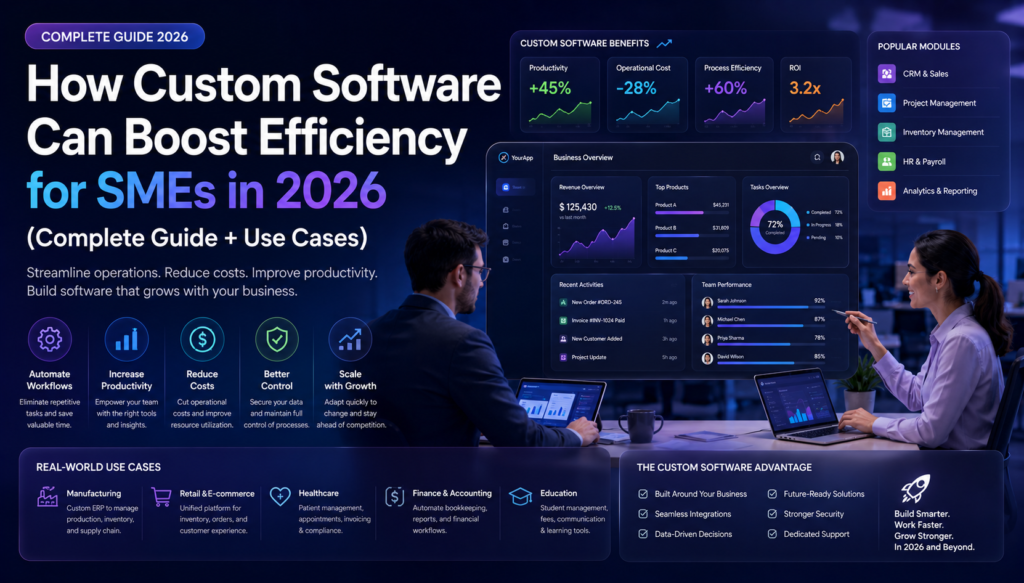
 How Custom Software Can Boost Efficiency for SMEs in 2026 (Complete Guide + Use Cases)
 Post By
Ratan Sharma
Post By
Ratan Sharma
In the rapidly evolving digital landscape, efficiency is no longer just about doing things faster; it is about doing things smarter, leaner, and with greater precision. As we approach 2026, the gap between SMEs (Small and Medium-sized Enterprises) that leverage intelligent, tailored systems and those relying on disjointed, manual processes is widening into an unbridgeable […]
Read More →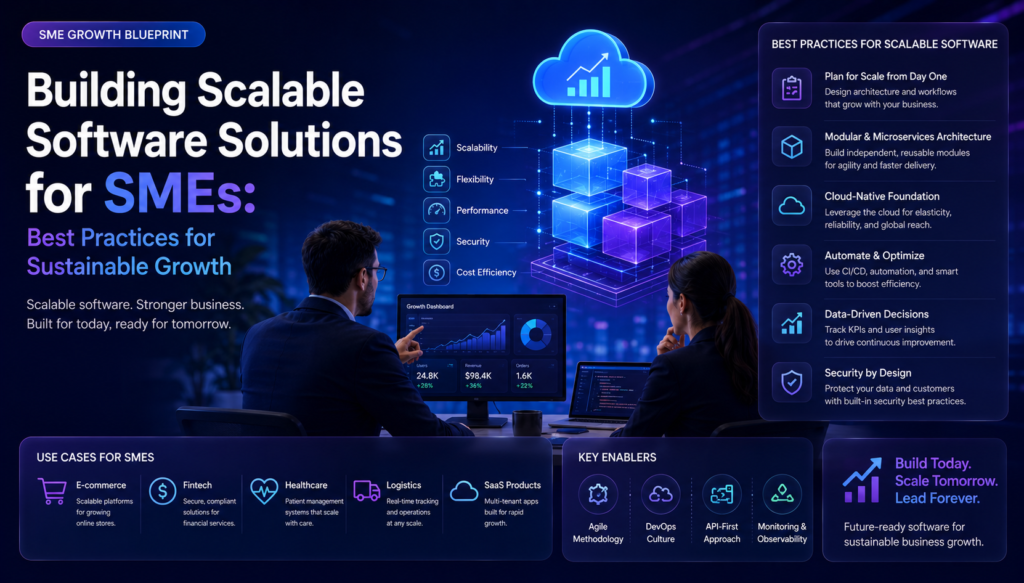 Development
 Building Scalable Software Solutions for SMEs: Best Practices for Sustainable Growth
Post By
Ratan Sharma
In today’s rapidly evolving digital landscape, small and medium enterprises face a critical challenge: building software systems that can grow alongside their business ambitions. The difference between companies that scale successfully and those that struggle often comes down to one factor—the scalability of their technology infrastructure. This comprehensive guide explores how SMEs can build scalable […]
Read More →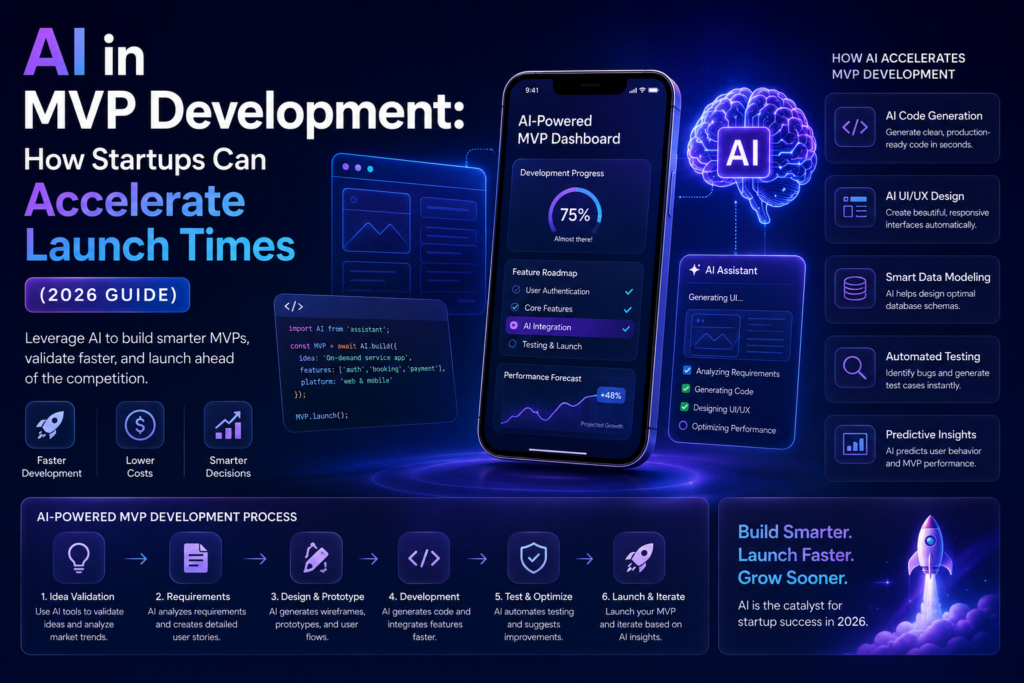 Development
 AI in MVP Development: How Startups Can Accelerate Launch Times (2026 Guide)
Post By
Ratan Sharma
Introduction: The New Velocity of Innovation In the high-stakes ecosystem of technology startups, speed isn’t just a competitive advantage—it is the primary determinant of survival. According to a 2026 McKinsey Global Institute report, AI-powered development workflows are now helping startups bring products to market up to 70% faster than traditional methods. With over 72% of […]
Read More →