





Device Connectivity & Firmware Development for Reliable IoT Products

Develop secure, stable, and scalable IoT firmware that connects your devices flawlessly to the cloud. Our Firmware & Device Connectivity services include microcontroller programming, hardware abstraction, sensor integration, protocol implementation, OTA updates, and optimized power management. Build devices that perform reliably in real-world environments with smooth communication and long-term stability.

Who Needs Firmware & Device Connectivity Services?

Perfect for companies building

If your device needs stable, low-latency, secure connectivity — firmware is the foundation.

Common Problems We Solve

Before digital transformation, enterprises often experience

We fix these with

IoT MVP vs Full IoT Development

 MVP is the fastest way to reduce risk, test real users, and attract funding.

Feature

Purpose

Cost

Hardware

Cloud

App/UI

Security

Timeline

IoT MVP

Validate idea quickly

Low

Basic/essential

MVP setup

Basic dashboards

Essential protections

4–10 weeks

Full IoT System

Scale product globally

Higher

Production-grade

Full architecture

Full mobile/web app

Enterprise security

4–9 months

Key Highlights – Firmware & Connectivity Development

Our Device Connectivity & Firmware Development Services

Microcontroller & Embedded Firmware Development

Programming on ESP32, STM32, NRF52, Arduino, Raspberry Pi, and custom boards.

Sensor Integration & Calibration

Drivers, signal processing, data filtering, calibration algorithms, and stability optimization.

Connectivity Protocol Implementation

MQTT, CoAP, BLE, ZigBee, Wi-Fi, LoRaWAN, NB-IoT, LTE-M — configured for reliability.

OTA Firmware Update System

Secure OTA (over-the-air) updates with rollback support and integrity checks.

Power Optimization for IoT Devices

Sleep modes, low-energy wake cycles, and optimized data transmission frequency.

Data Pipeline & Storage Setup

Time-series database + structured data flows to support MVP analytics.

Firmware Security Implementation

Encrypted communication, secure boot, certificate-based authentication, key rotation.

Device Provisioning & Authentication

Unique device identity, registration flow, and secure onboarding.

Device Provisioning & Authentication

Run logic locally for faster response and reduced cloud dependency.

Testing, Debugging & Hardware Validation

Environmental testing, real-world simulation, and stability benchmarking.

Industry-Specific Use Cases

Industrial IoT

  • Machine sensors
  • PLC connectivity
  • automation controllers

Healthcare & Wearables

  • Heart rate sensors
  • body temperature trackers
  • BLE medical devices

Smart Home & Consumer IoT

  • Smart appliances
  • lighting systems
  • home automation controllers

Smart Energy & Utilities

  • Smart meters
  • grid devices
  • energy efficiency hardware

Environmental Monitoring

  • Weather stations
  • agriculture sensors
  • air quality trackers

Transportation

  • Asset tagging
  • GPS sensors
  • cold-chain IoT devices

Firmware Development Process

01

Hardware & Requirement Analysis

Understand sensors, chips, connectivity modules, and environmental constraints.

02

Firmware Architecture Planning

Define memory structure, drivers, task management, and connectivity workflows.

03

Sensor Driver Development

Build accurate, stable drivers with filtering, smoothing & calibration.

04

Connectivity Implementation

Integrate MQTT/BLE/Wi-Fi/LoRa and test cloud/device handshake.

08

Documentation & Handover

Firmware diagrams, protocols, configuration docs, and testing logs.

07

Optimization & Field Testing

Battery tests, range tests, stress tests, and environmental simulation.

06

OTA Update System

Implement upgrade mechanism with integrity validation & fallback safety.

05

Security Layer Integration

Add encryption, secure boot, identity provisioning & protected keys.

Security & Compliance

We follow strict IoT security best practices

End-to-end encryption

Secure boot & OTA verification

Firmware signing

Role-based access

Cloud IAM policies

Data integrity & logging

Device identity certificates

GDPR-ready data handling

Pricing – Firmware & Connectivity Development

Pricing depends on hardware complexity, connectivity, security needs, and number of sensors.

Basic Firmware (1–2 sensors)

$5,000–$15,000

Advanced Firmware (multi-sensor device)

$15,000–$40,000

Complex devices (OTA + security + automation)

$40,000–$90,000

Case Study (Under NDA)

Industrial Sensor Firmware

An industrial automation company required low-latency communication for predictive maintenance devices.

What we delivered

Results

What Our Clients Say

Our Tech Stack

FAQs – Device Connectivity & Firmware Development

We work with ESP32, STM32, NRF52, Arduino, Raspberry Pi, TI and custom boards. We also support BLE, Wi-Fi, LoRa, NB-IoT, and cellular modules.

Yes — we develop custom drivers, calibration logic, and integration layers for unique or proprietary sensors.

Absolutely — we implement secure OTA with rollback protection, checksum validation, and version management.

Through protocol optimization, reconnection logic, heartbeat messages, buffering, and device-cloud handshake testing.

Yes — we implement secure provisioning, certificate-based identity, and automated onboarding pipelines.

Yes — we optimize sleep cycles, transmission intervals, low-power modes, and reduce CPU load.

Yes — we can work directly with your hardware team or handle firmware end-to-end with our engineering partners.

Ready to Build Reliable IoT Firmware?

Let’s develop secure, scalable firmware and connectivity systems for your next-generation IoT product.

Insights & Guides for Startups & SMEs

Stay ahead with expert guides on cost, MVP development, and choosing the right software solutions for your business.

Development
Dec 27, 2025

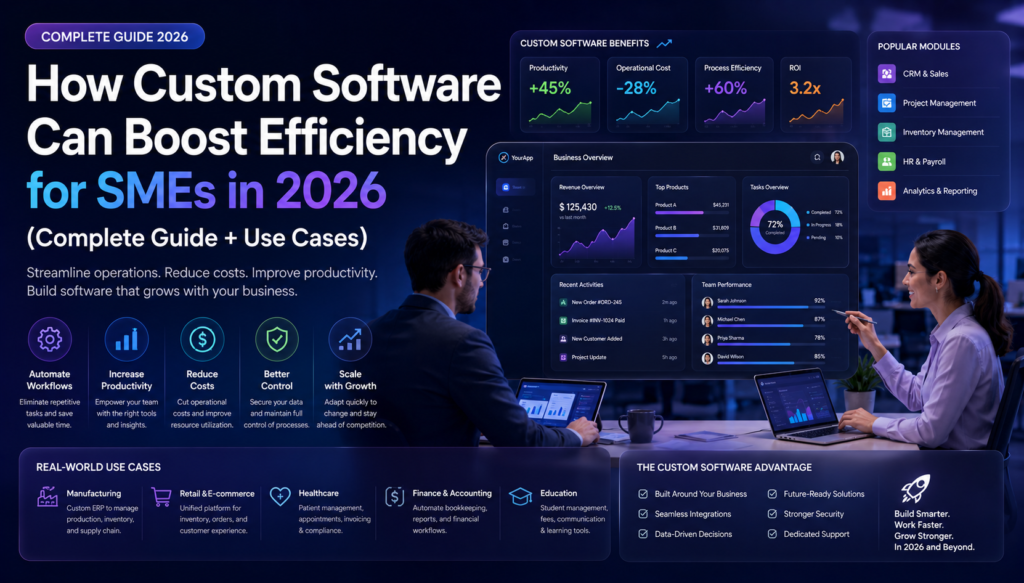
How Custom Software Can Boost Efficiency for SMEs in 2026 (Complete Guide + Use Cases)

Post By Ratan Sharma

In the rapidly evolving digital landscape, efficiency is no longer just about doing things faster; it is about doing things smarter, leaner, and with greater precision. As we approach 2026, the gap between SMEs (Small and Medium-sized Enterprises) that leverage intelligent, tailored systems and those relying on disjointed, manual processes is widening into an unbridgeable […]

Read More →
Development
Dec 22, 2025

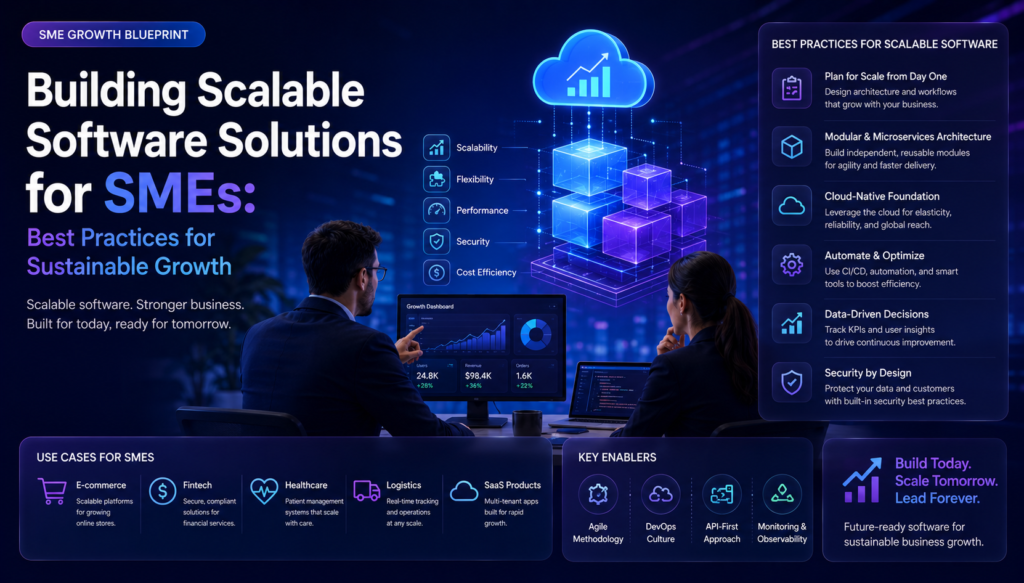
Building Scalable Software Solutions for SMEs: Best Practices for Sustainable Growth

Post By Ratan Sharma

In today’s rapidly evolving digital landscape, small and medium enterprises face a critical challenge: building software systems that can grow alongside their business ambitions. The difference between companies that scale successfully and those that struggle often comes down to one factor—the scalability of their technology infrastructure. This comprehensive guide explores how SMEs can build scalable […]

Read More →
Development
Dec 14, 2025

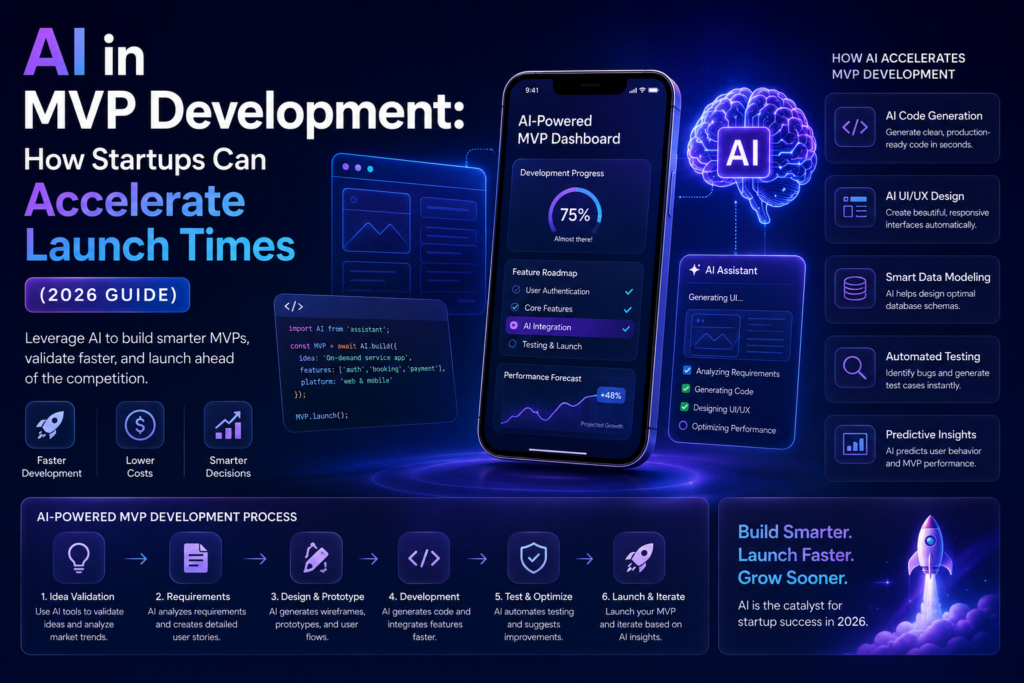
AI in MVP Development: How Startups Can Accelerate Launch Times (2026 Guide)

Post By Ratan Sharma

Introduction: The New Velocity of Innovation In the high-stakes ecosystem of technology startups, speed isn’t just a competitive advantage; it is the primary determinant of survival. The traditional Silicon Valley maxim was “move fast and break things.” As we approach 2026, the paradigm has fundamentally shifted to “move instantly and validate intelligently.” For decades, the […]

Read More →