How Much Does Web Development Cost in 2026? (Complete Pricing Guide for Businesses & Startups)
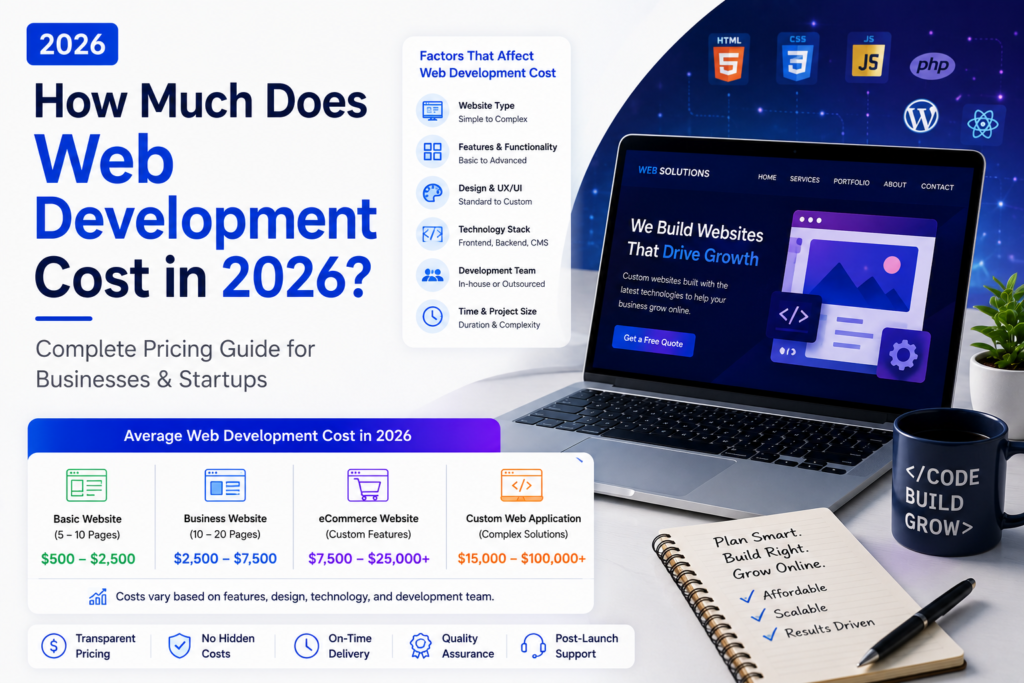
In 2026, web development cost ranges from $3,000 for a basic small business website to $250,000+ for an enterprise platform, with the realistic baseline for a professional, revenue-generating business site falling between $15,000–$30,000 — driven by an increasingly AI-first digital economy where users form a credibility opinion in just 0.05 seconds and over 70% of businesses now maintain an active digital presence. Developer hourly rates vary dramatically by region — from $25–$50/hr in India to $120–$250/hr in the USA and Canada — making offshore and hybrid development models an attractive strategy for startups looking to stretch budgets by 50–70% without sacrificing technical quality. Hidden costs including cloud hosting ($20–$500/month), security, content updates, and annual maintenance (15–25% of original build cost per year) routinely add 30–40% on top of headline project fees, while AI-powered features such as personalisation engines and predictive search add a further $10,000–$40,000 to project budgets. The highest-leverage investment any business can make is in UX design — research shows every $1 invested in UX returns an average of $100 — making design quality, not just development cost, the true determinant of website ROI in 2026.
Mobile App Development Cost in 2026: A Complete Pricing Guide for Startups & SMEs
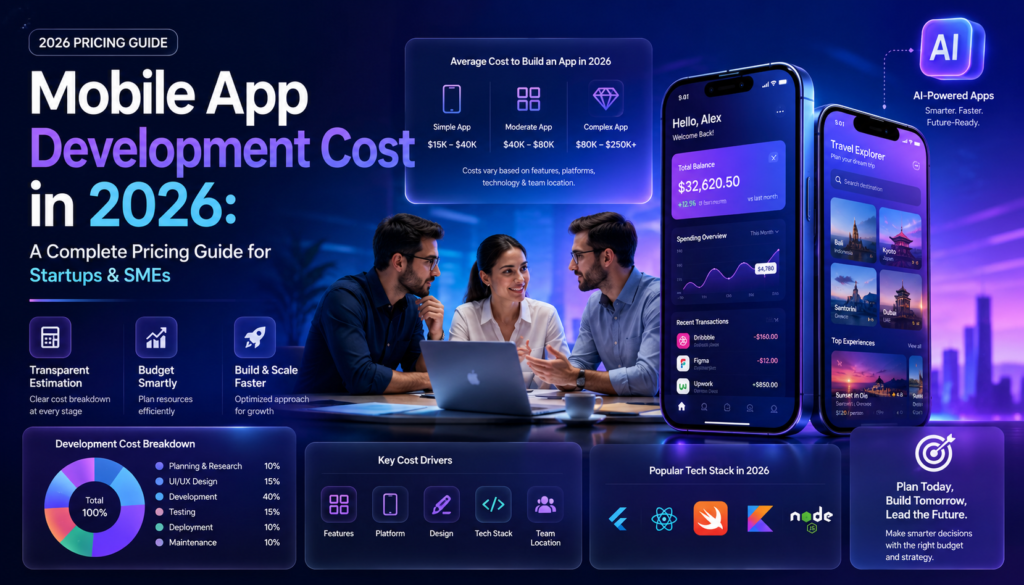
In 2026, mobile app development cost ranges from $25,000–$50,000 for a basic MVP to $250,000+ for enterprise-grade or AI-powered platforms, with mid-complexity apps falling between $60,000–$150,000 — driven by rising user expectations for 5G-optimised experiences, real-time data sync, and generative AI integrations that have become baseline requirements rather than premium additions. Developer hourly rates vary sharply by region — from $15–$60/hr in India and Southeast Asia to $150–$250+/hr in the USA and Canada — making cross-platform frameworks like Flutter a critical cost lever, reducing development spend by 30–40% compared to native iOS and Android builds by enabling a single shared codebase. QA and security testing should consume 15–20% of total budget ($8,000–$30,000), while post-launch annual maintenance runs 15–25% of the original build cost — meaning a $100,000 app requires at least $20,000/year to stay secure, OS-compatible, and competitive, with hidden costs like cloud hosting, third-party API fees, and Apple/Google’s 15–30% in-app transaction commission adding further to total cost of ownership. The most capital-efficient strategy for startups in 2026 remains the MVP-first approach — launching with one or two core features for $30,000–$50,000, gathering real user data, and iterating based on proven demand rather than assumption.
How Generative AI Is Changing the Way Software Is Built (Architecture, Tools & Use Cases)
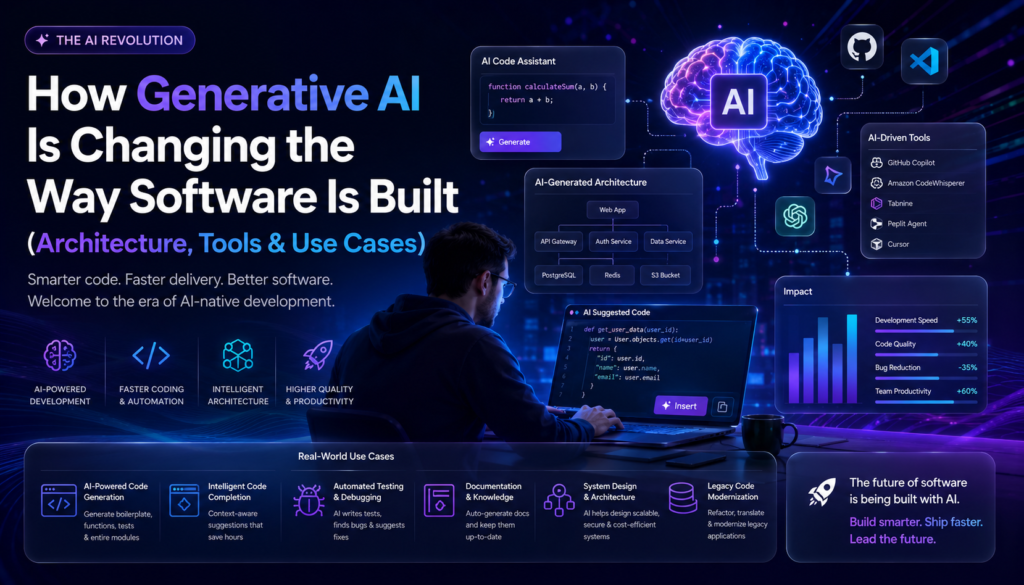
The software development landscape is currently undergoing its most significant shift since the transition from assembly language to high-level programming. We aren’t just talking about a new framework or a trendy library; we are witnessing a fundamental rewrite of the Software Development Lifecycle (SDLC). In 2026, generative AI in software development has moved past the […]
How Custom Software Can Boost Efficiency for SMEs in 2026 (Complete Guide + Use Cases)
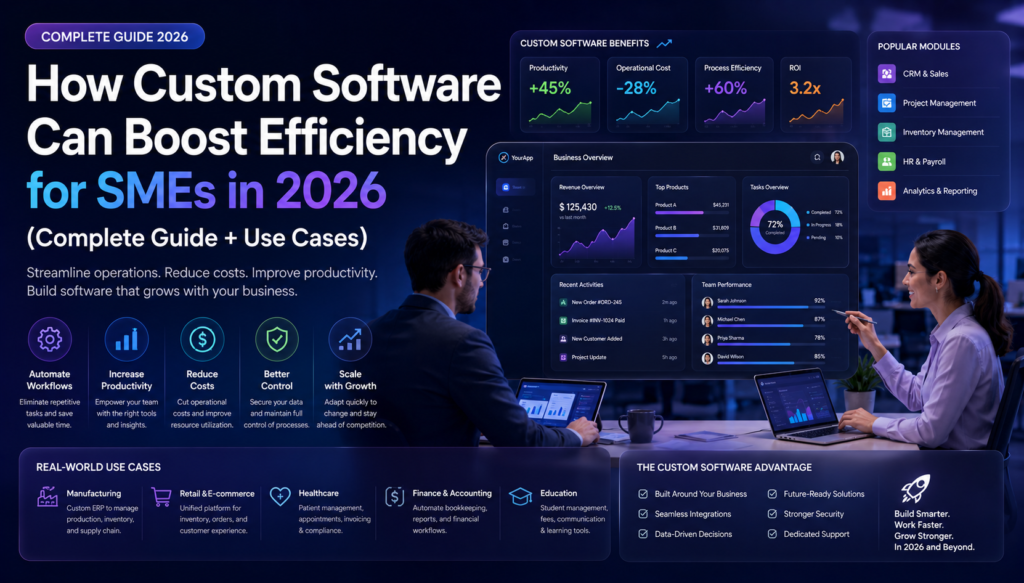
In the rapidly evolving digital landscape, efficiency is no longer just about doing things faster; it is about doing things smarter, leaner, and with greater precision. As we approach 2026, the gap between SMEs (Small and Medium-sized Enterprises) that leverage intelligent, tailored systems and those relying on disjointed, manual processes is widening into an unbridgeable […]
Building Scalable Software Solutions for SMEs: Best Practices for Sustainable Growth
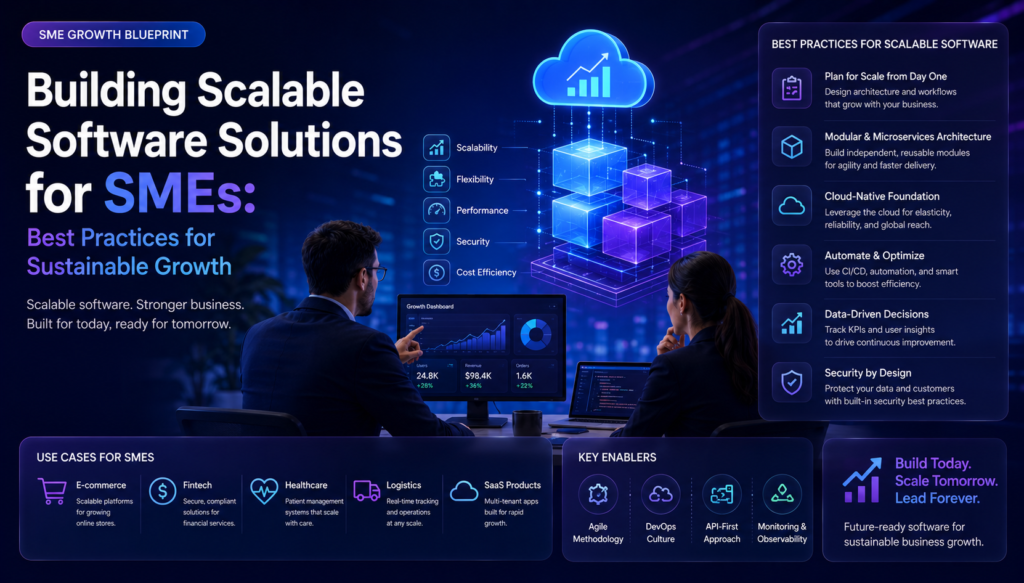
In today’s rapidly evolving digital landscape, small and medium enterprises face a critical challenge: building software systems that can grow alongside their business ambitions. The difference between companies that scale successfully and those that struggle often comes down to one factor—the scalability of their technology infrastructure. This comprehensive guide explores how SMEs can build scalable […]
AI in MVP Development: How Startups Can Accelerate Launch Times (2026 Guide)
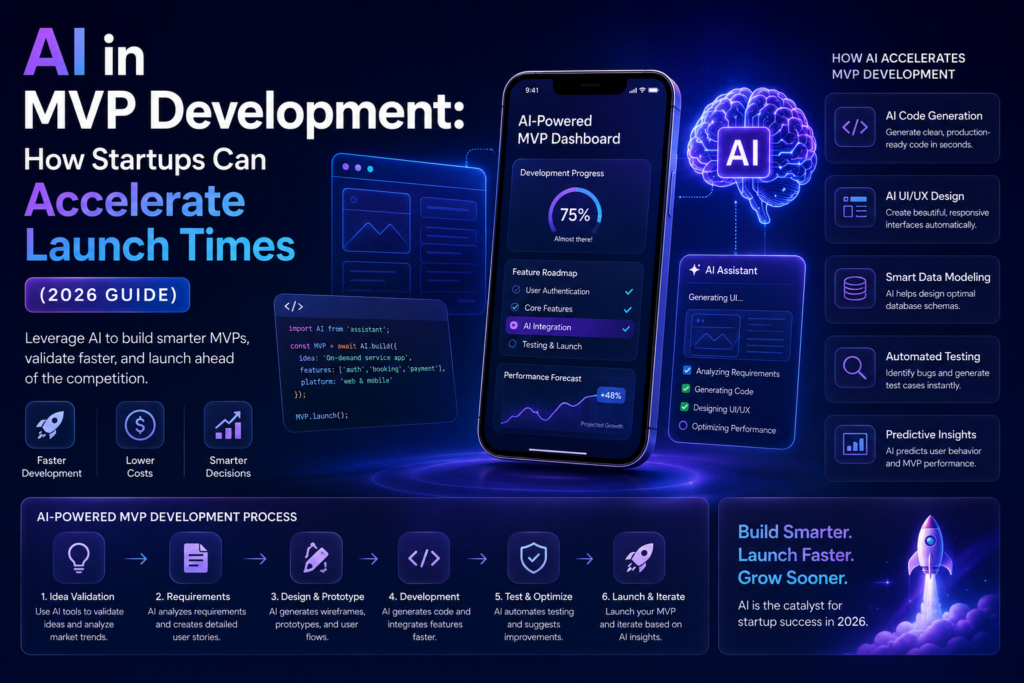
Introduction: The New Velocity of Innovation In the high-stakes ecosystem of technology startups, speed isn’t just a competitive advantage; it is the primary determinant of survival. The traditional Silicon Valley maxim was “move fast and break things.” As we approach 2026, the paradigm has fundamentally shifted to “move instantly and validate intelligently.” For decades, the […]
Why India Remains the Global Leader in Software Outsourcing Services
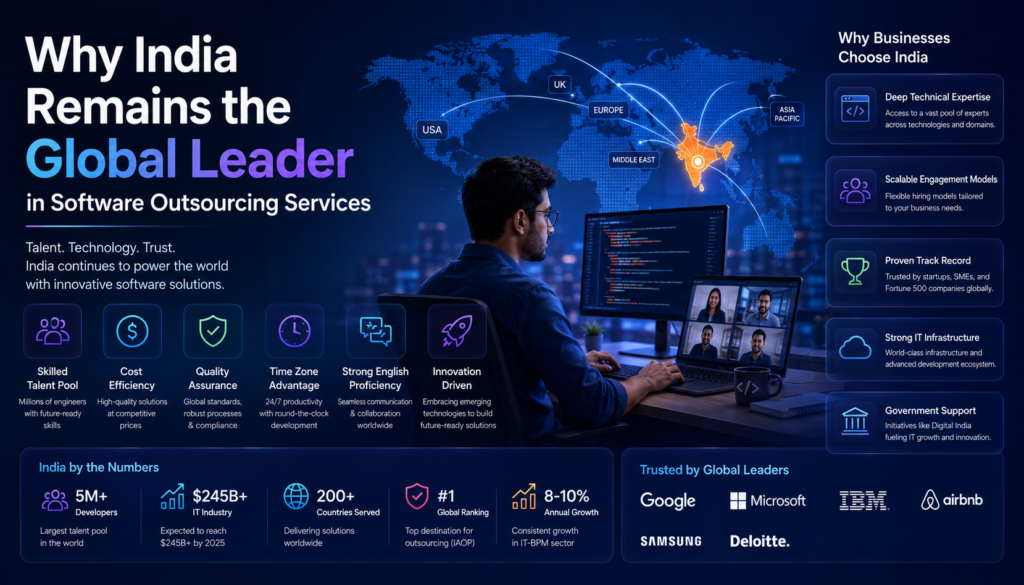
India continues to dominate the global market for software outsourcing services, backed by a $283 billion IT industry, over 5.4 million professionals, and unmatched talent scale. Businesses choose India not only for up to 70% cost savings, but also for its mature processes, strong English proficiency, 24/7 development advantage, and deep expertise in next-gen technologies like AI, Cloud, and Data Analytics. For startups building MVPs or enterprises driving digital transformation, outsourcing to India offers a strategic combination of cost-efficiency, scalability, quality, and long-term innovation partnership.
Outsourcing vs In-House Development: Which is Better for Startups?
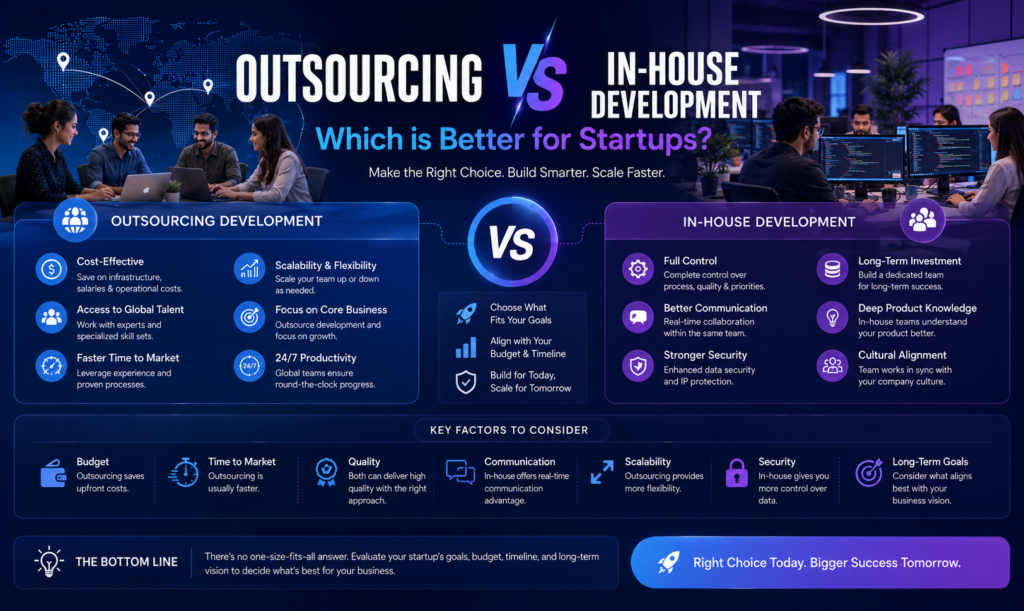
Startups operate in a high-pressure environment where speed wars with stability. Every founder faces the same critical question: Do you build a team of full-time employees to ensure long-term control, or do you partner with external experts to move fast and conserve cash? This decision isn’t academic—it’s existential. Choose wrong, and the consequences are severe. […]
How Custom Software Development Can Help Your Startup Scale Faster
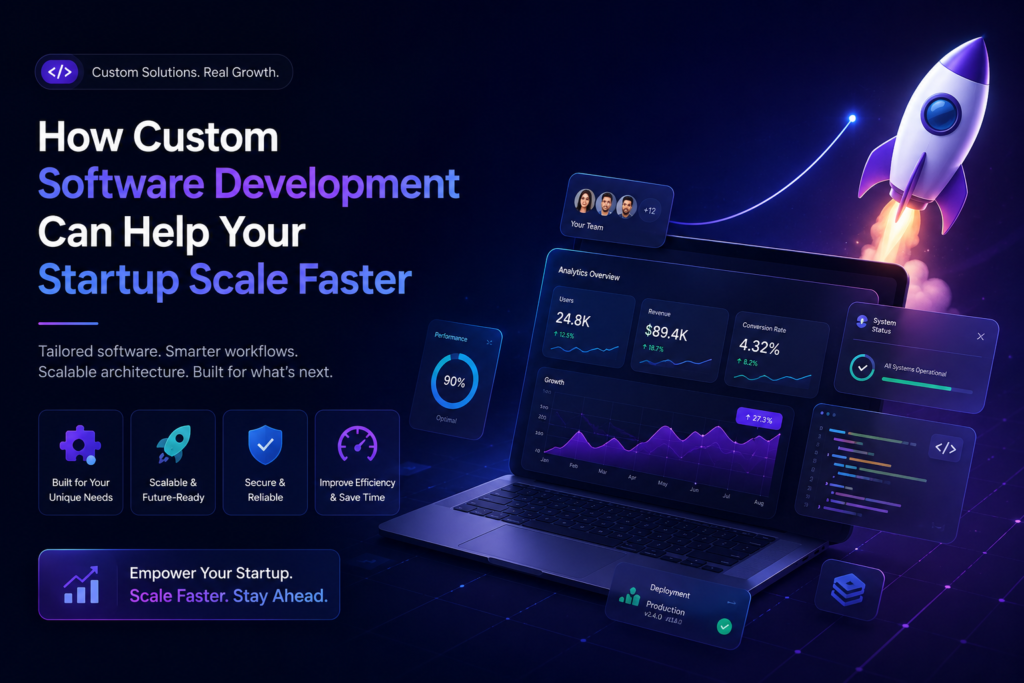
Every startup founder dreams of rapid growth. But here’s the harsh reality: approximately 74% of high-growth internet startups fail due to premature or improper scaling, and only 1 in 200 startups actually becomes a successful scaleup. The difference between those who make it and those who don’t often comes down to one critical factor: operational […]
Top Signs Your Business Needs Custom Software Development
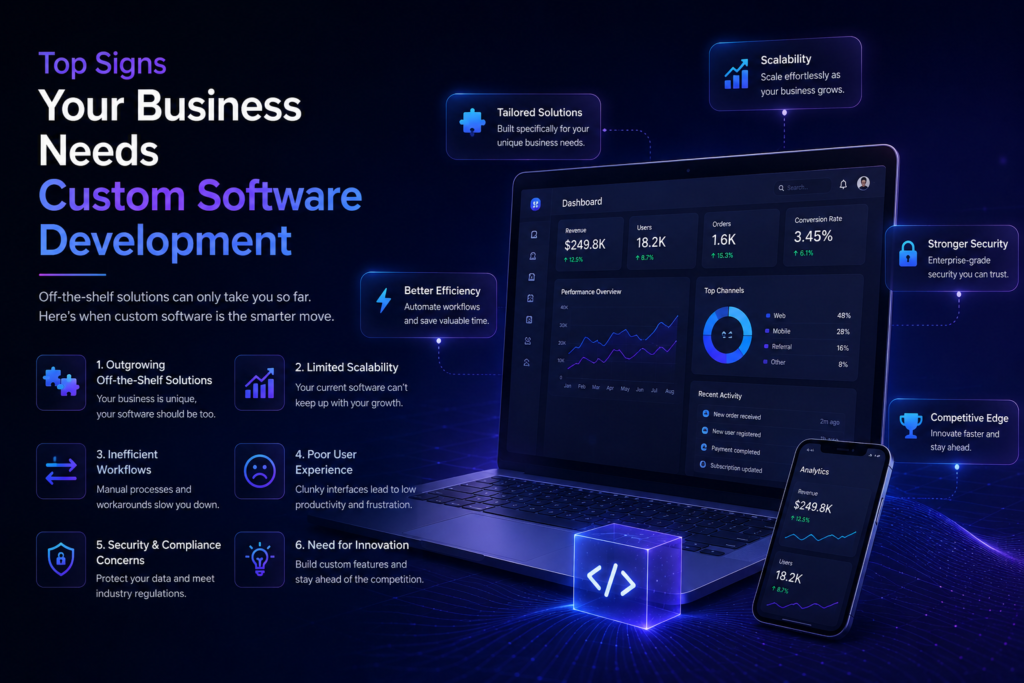
Why Custom Software Is Becoming a Necessity for Growing Businesses In today’s digital-first economy, software isn’t just a tool—it’s the foundation of your business operations. Fast-growing startups and small-to-medium enterprises (SMEs) increasingly rely on technology to manage everything from customer relationships to inventory tracking, financial reporting, and team collaboration. Yet many businesses find themselves stuck […]