


IoT Application Development for Connected, Intelligent & Scalable Systems

Build powerful IoT applications that connect devices, visualize real-time data, automate workflows, and scale effortlessly in the cloud. We develop full IoT web and mobile apps, dashboards, device management systems, and analytics platforms that give your business complete control over your IoT ecosystem. Secure, scalable, and built for seamless integration with hardware and cloud services.

Who Needs IoT Application Development?

Ideal for businesses that require

Perfect for startups, SMEs, product companies, OEMs, and enterprises.

Common IoT App Challenges We Solve

Before digital transformation, enterprises often experience

We solve these with

IoT MVP vs Full IoT Development

 MVP is the fastest way to reduce risk, test real users, and attract funding.

Feature

Purpose

Cost

Hardware

Cloud

App/UI

Security

Timeline

IoT MVP

Validate idea quickly

Low

Basic/essential

MVP setup

Basic dashboards

Essential protections

4–10 weeks

Full IoT System

Scale product globally

Higher

Production-grade

Full architecture

Full mobile/web app

Enterprise security

4–9 months

Key Highlights – IoT Application Development

Our IoT Application Development Services

Feature-rich dashboards for real-time device data, charts, analytics, and automation rules.

Feature-rich dashboards for real-time device data, charts, analytics, and automation rules.

IoT Mobile App Development

IoT mobile apps built in Flutter, React Native or native platforms for remote monitoring and device control.

Device Management Platforms

Provisioning, onboarding, firmware updates, device grouping, and activity logs.

Cloud Setup for MVP

AWS IoT Core, Azure IoT Hub, or GCP IoT Core configured with minimum viable architecture.

IoT Backend & API Development

Device registry, message routing, data pipelines, API endpoints, and security layers.

Real-Time Communication Implementation

Support for MQTT, CoAP, WebSockets, BLE, and REST for consistent data streaming.

IoT Cloud Integration

AWS IoT Core, Azure IoT Hub, and Google Cloud IoT integration with scalable architecture.

IoT Workflow Automation

Custom rules, triggers, alerts, and automations to simplify operations.

IoT Analytics & Reporting

Charts, visualization, behavior patterns, sensor health insights, and predictive analytics.

Security & Compliance Implementation

Token-based auth, encryption, secure API gateways, IAM roles & access controls.

Industry-Specific IoT Application Use Cases

Manufacturing

  • Machine dashboards
  • predictive maintenance apps
  • automation control panels

Logistics & Transportation

  • Fleet dashboards
  • GPS tracking apps
  • temperature monitoring panels

Healthcare

  • Wearable dashboards
  • patient monitoring apps
  • device control interfaces

Smart Home & Energy

  • Home automation apps
  • energy tracking platforms
  • connected device control

Retail

  • Smart shelves
  • inventory dashboards
  • footfall analytics

Agriculture

  • Soil & climate dashboards
  • irrigation apps
  • greenhouse monitoring

IoT Application Development Process

01

Requirement Discovery & UX Planning

Understand devices, workflows, and user needs to define app architecture and UI flows.

02

Architecture & Data Pipeline Design

Blueprint for communication, cloud routing, database schemas, device registry & real-time flows.

03

Frontend & Mobile App Development

Build interactive dashboards, screens, visualizations, and data-driven UI components.

04

Backend, APIs & Cloud Integration

Set up device registry, authentication, cloud rules, MQTT endpoints, routing & storage.

08

Deployment & Scaling Support

Cloud deployment, CI/CD setup, DevOps monitoring, scale planning.

07

Quality Assurance & Security Testing

Load tests, penetration tests, device simulations, and protocol validation.

06

Automation & Workflow Buildout

Implement triggers, alerts, device commands, and automated rules.

05

Real-Time Connectivity Implementation

Configure MQTT/WebSockets/BLE communication between devices and apps.

Security & Compliance

End-to-end encrypted communication (TLS)

Device identity and key-based authentication

Secure API gateways & IAM roles

Cloud-level security hardening

Firmware update security (OTA)

Role-based access control

Pricing — IoT App Development

Pricing depends on complexity, number of device types, dashboards, and automation features.

Basic IoT Application

$15,000–$30,000

Mid-Level System

$30,000–$60,000

Advanced Multi-Device IoT Platform

$60,000–$150,000+

Case Study (Under NDA)

IoT App for Smart Energy Monitoring

A renewable energy company needed a cloud-connected app to monitor real-time consumption and automate alerts.

What we delivered

Results

What Our Clients Say

Our Tech Stack

FAQs – IoT Application Development

Most IoT apps take 8–20+ weeks depending on dashboards, device types, automation rules, and cloud complexity. Multi-device ecosystems require more time for testing & integration.

Yes — we work with ESP32, STM32, Raspberry Pi, Nordic, custom hardware, and any device that supports MQTT, BLE, or REST communication.

Yes — we build cross-platform dashboards, Flutter/React Native apps, and responsive web applications optimized for real-time data.

Absolutely — we create data pipelines, time-series analysis, predictive insights, and AI-based automation.

We use encrypted protocols, secure authentication, cloud policies, API security, device identity, and compliance controls.

Yes — we design cloud-native systems with horizontal scaling and message routing optimized for high concurrency.

Yes — our IoT team can assist with firmware development or collaborate with your hardware partner.

Ready to Build Your IoT Application?

Let’s develop a powerful, real-time IoT application that connects devices, visualizes data, and automates operations.

Insights & Guides for Startups & SMEs

Stay ahead with expert guides on cost, MVP development, and choosing the right software solutions for your business.

Development
Dec 27, 2025

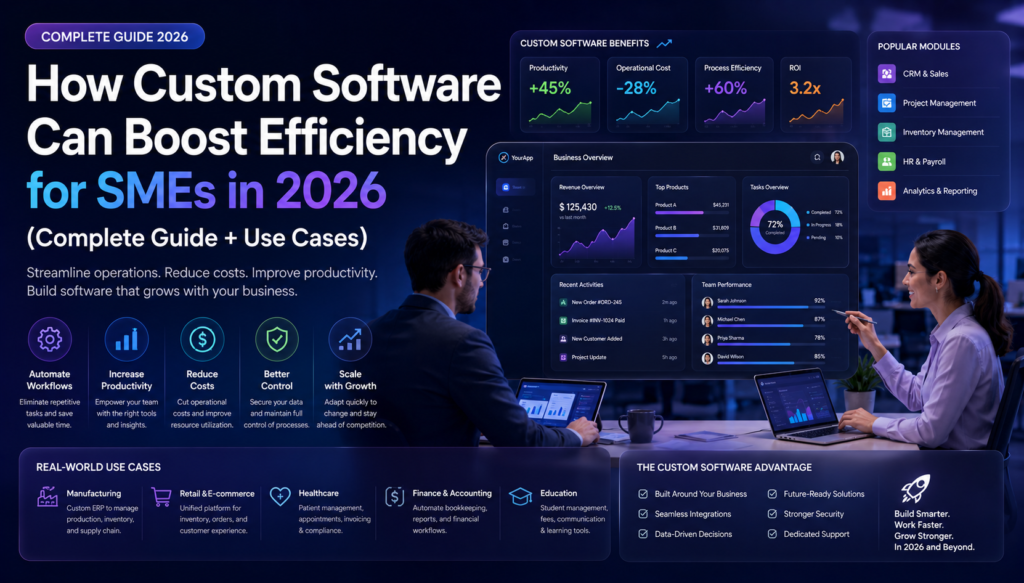
How Custom Software Can Boost Efficiency for SMEs in 2026 (Complete Guide + Use Cases)

Post By Ratan Sharma

In the rapidly evolving digital landscape, efficiency is no longer just about doing things faster; it is about doing things smarter, leaner, and with greater precision. As we approach 2026, the gap between SMEs (Small and Medium-sized Enterprises) that leverage intelligent, tailored systems and those relying on disjointed, manual processes is widening into an unbridgeable […]

Read More →
Development
Dec 22, 2025

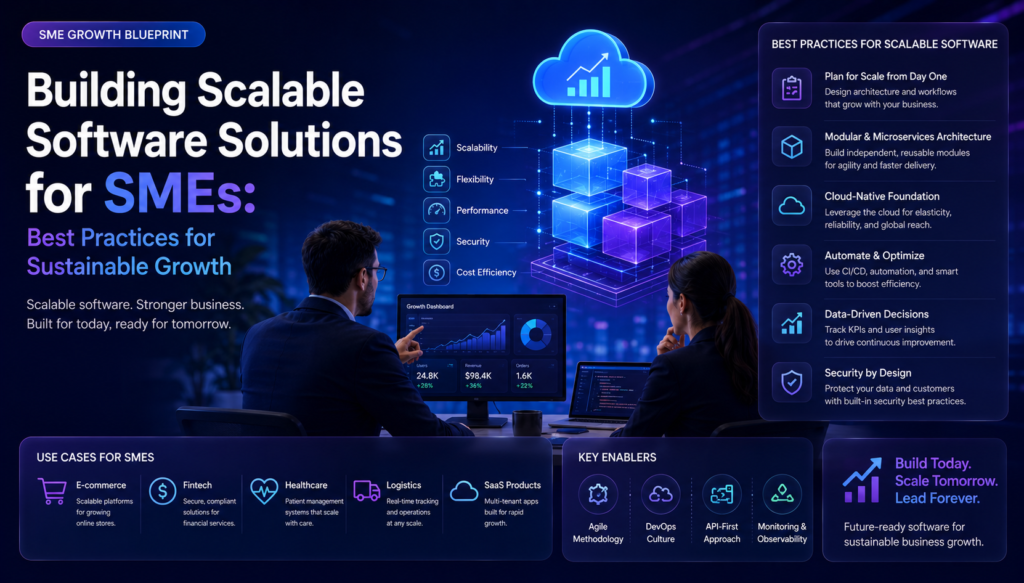
Building Scalable Software Solutions for SMEs: Best Practices for Sustainable Growth

Post By Ratan Sharma

In today’s rapidly evolving digital landscape, small and medium enterprises face a critical challenge: building software systems that can grow alongside their business ambitions. The difference between companies that scale successfully and those that struggle often comes down to one factor—the scalability of their technology infrastructure. This comprehensive guide explores how SMEs can build scalable […]

Read More →
Development
Dec 14, 2025

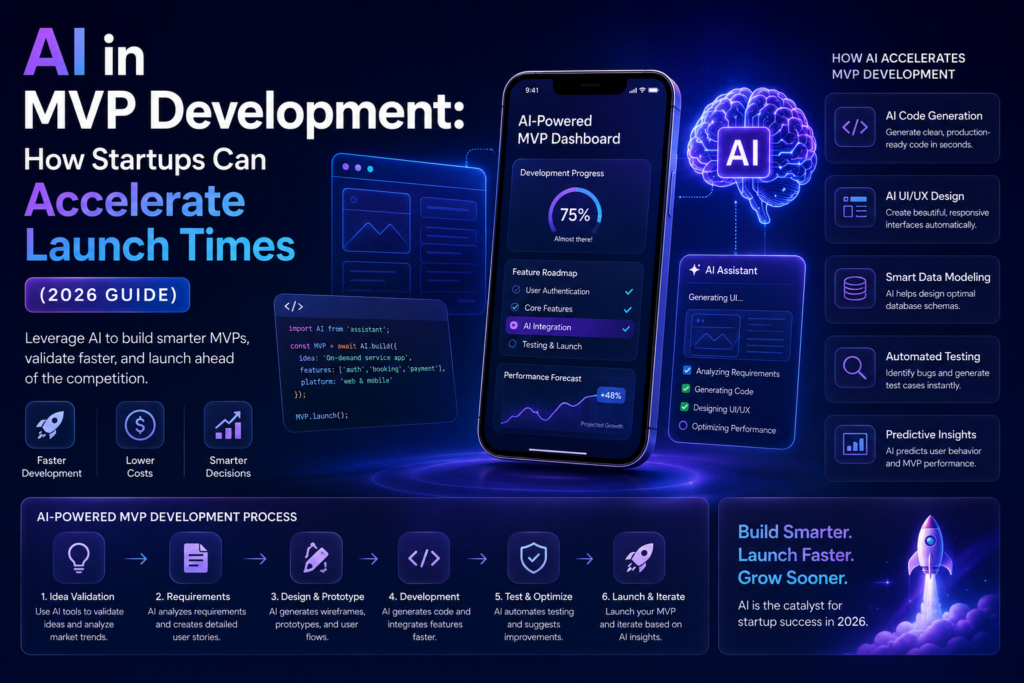
AI in MVP Development: How Startups Can Accelerate Launch Times (2026 Guide)

Post By Ratan Sharma

Introduction: The New Velocity of Innovation In the high-stakes ecosystem of technology startups, speed isn’t just a competitive advantage; it is the primary determinant of survival. The traditional Silicon Valley maxim was “move fast and break things.” As we approach 2026, the paradigm has fundamentally shifted to “move instantly and validate intelligently.” For decades, the […]

Read More →